
Our company's 18-ton/hour biomass pellet boiler at a certain company in Yinan has been officially put into operation.....
Our company's 18-ton/hour biomass pellet boiler at a certain company in Yinan has been officially put into operation. The boiler's final energy efficiency and environmental protection tests were completed by the Shandong Institute of Special Equipment.
This boiler is a direct-fired chain grate boiler specially developed by our company based on the actual needs of users and the characteristics of the fuel. The fuel used is a composite type of biomass pellets.
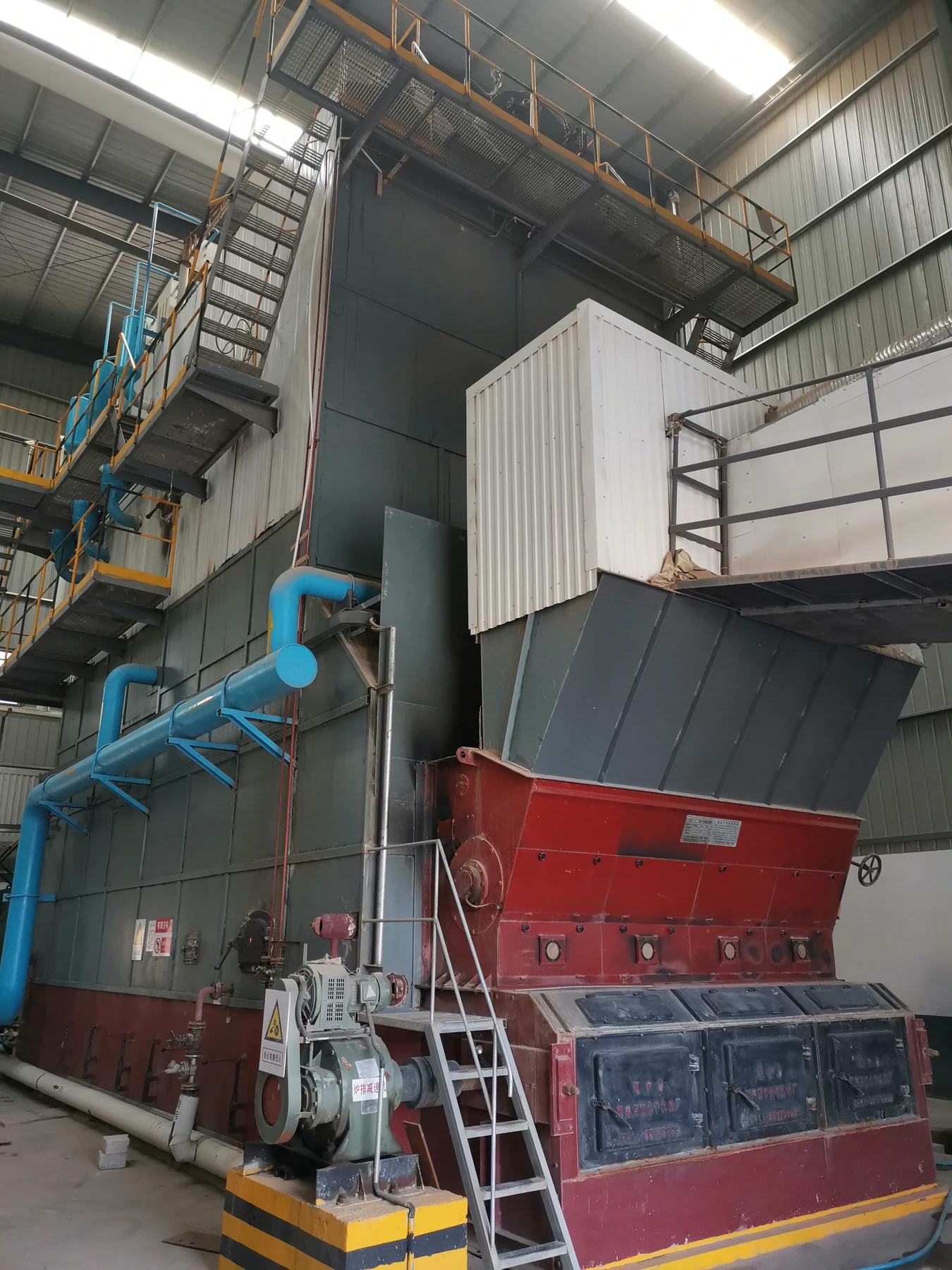
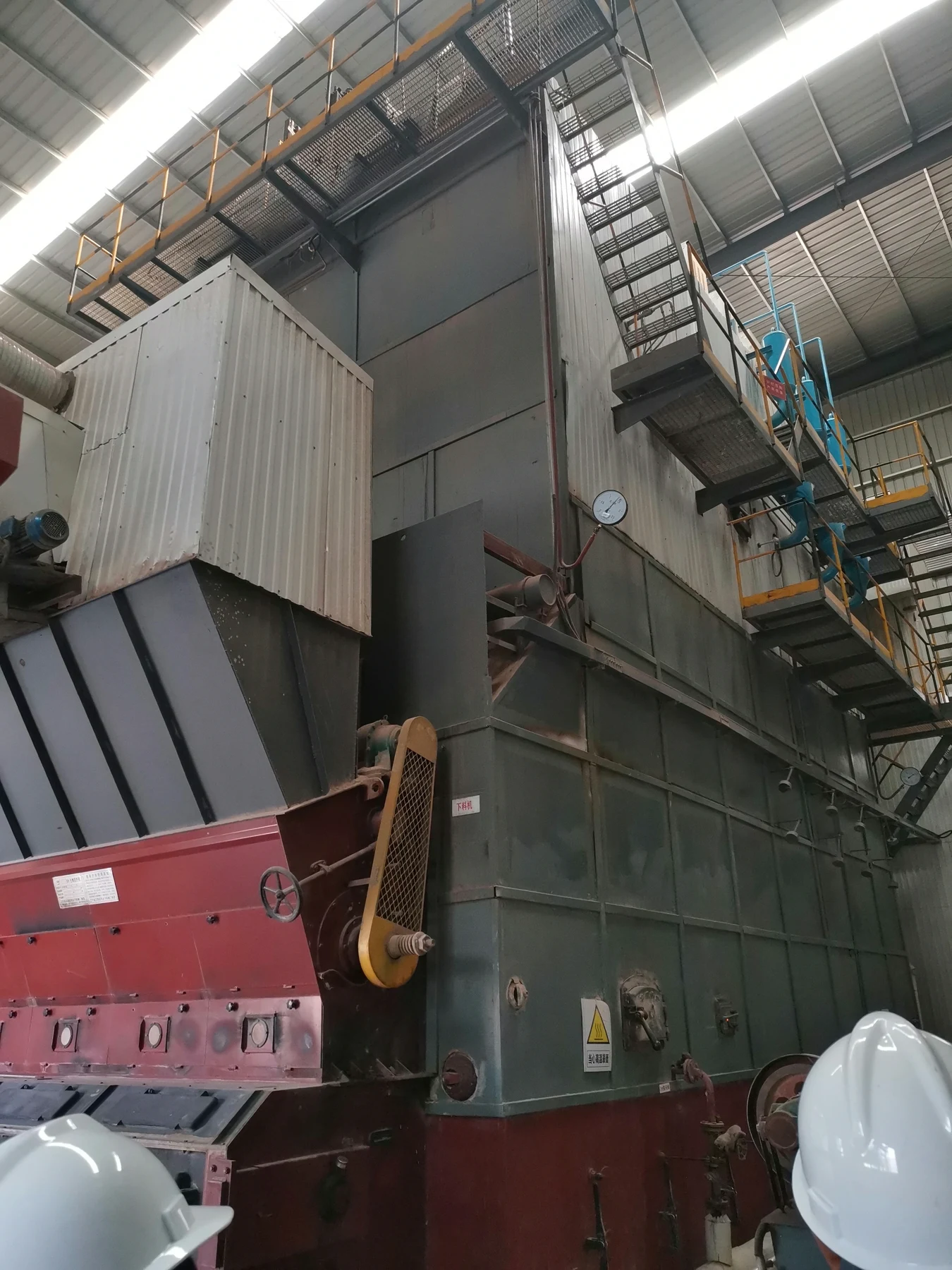
This boiler has the following unique features specifically for biomass fuel:
The inclination angles and coverage areas of the front and rear arches are different. The rear arch required by the biomass boiler has a large inclination angle and a small coverage area. The throat formed by the front and rear arches can generate more intense smoke turbulence, which is beneficial for the thorough crushing and complete combustion of the large biomass particles.
2. The dimensions of the furnace (length, width, height) and the volume of the furnace are significantly larger than those of conventional boilers. Since biomass boilers require a larger combustion space than coal-fired boilers, the heat load of the furnace volume needs to be 5 to 6 times that of a coal-fired boiler of the same tonnage to ensure complete and thorough combustion of biomass. Boilers simply modified from coal-fired boilers do not meet this requirement and often experience insufficient output and inability to operate at the designed load.
3. The feeding system that suits the characteristics of biomass feedstock is different. Biomass fuel, especially bulk biomass, cannot achieve a relatively uniform particle size, and they are prone to clump together with each other. Therefore, the traditional coal feeding mechanism cannot meet the requirements of uniform and continuous feeding, and different feeding methods must be customized according to the characteristics of different biomass.
4. Anti-reheating Design. Biomass fuel is quite different from traditional coal-based fuel. If the feeding mechanism is designed based on the structure of a coal-fired boiler, it is prone to backfire, and in severe cases, it can damage the coal hopper or even the feeding device. Our company has sufficient technical solutions and design features in this regard, which can completely prevent backfire.
5. Measures to Prevent Ash Accumulation. Biomass fuel has large ash particles and is lightweight, which can easily carry sparks. When flowing between the heating surfaces of the boiler, it is prone to adhere and accumulate ash. Therefore, the particle size must be reduced through structural adjustment. At the same time, this adjusted structure must also have a self-cleaning function to reduce the impact of ash accumulation on the heating surfaces, etc.
6. Flue Gas Dust Removal System. The flue gas dust removal system installed at the tail end of the biomass-fired boiler not only includes the bag-type dust collector but also adds an additional set of cyclone dust removal system for pre-dust removal. This is to prevent the bag-type dust collector from being affected by the sparks mixed in the flue gas and causing bag burning.